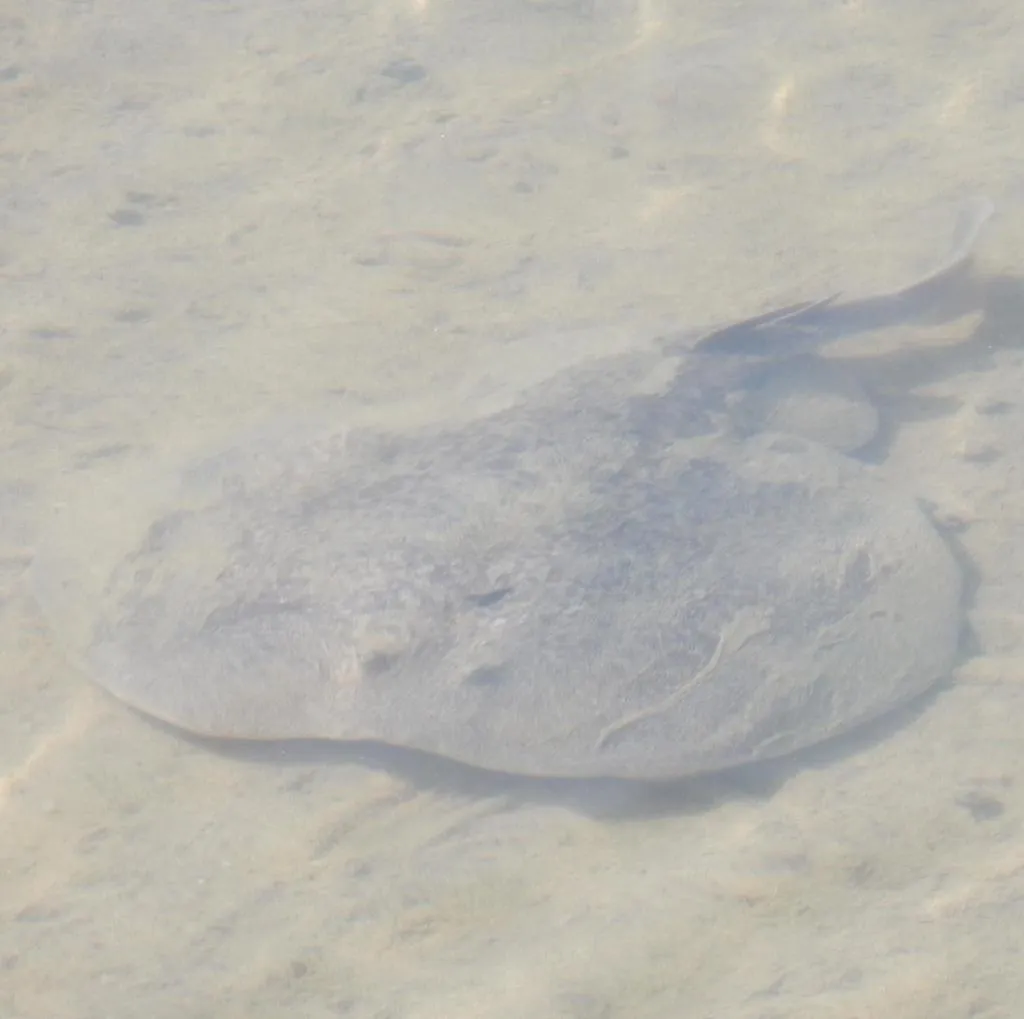
Torpedo Ray
Torpedo sinuspersici
The Gulf torpedo, or variable electric ray, is an electric ray of the family Torpedinidae found in the Indian Ocean, though it may in fact be a complex of several local endemic species. Its ornate dorsal patterning distinguishes it from other Torpedo species sharing its range. It also goes by the name marbled electric ray, which should not be confused with Torpedo marmorata.
Family
Torpedinidae
Avg Size
60-100 cm
Habitat
The Gulf torpedo is the most widely distributed electric ray in the western Indian Ocean, with a patchy range reaching South Africa, Somalia, the Red Sea, the Arabian Sea, the Persian Gulf, Sri Lanka, and the Andaman Sea. Less certain reports place it elsewhere, including Madagascar, the Seychelles, and the Laccadive Islands, and a first Mediterranean record in 2002 remains unconfirmed given its close resemblance to the well-established Torpedo marmorata. It occurs in shallow sandy areas, on and around coral reefs, and offshore down to about 150 m.
Behaviour
Much of the Gulf torpedo's life history remains unknown. It is a sluggish predator of bony fish, hunting actively at night as it sculls slowly about a metre above the bottom, while by day it tends to rest on the seabed and ambush passing prey. It wraps its broad pectoral fins around a target fish before delivering a stunning electric shock. Usually solitary, individuals may gather during the mating season. Reproduction is aplacental viviparous: the embryos first live off their yolk sacs and then on a nutrient-rich uterine fluid from the mother, with gestation lasting six to eight months.